How do wine auctions work in Hong Kong? What buyers should know
Since abolishing wine duty in 2008, Hong Kong has become one of the world's major wine auction centres. Buyers can bid in the room, by absentee bid, by phone or online; on top of the hammer price, there is generally a buyer's premium and other fees to pay. Most lots are sold as they are, so read the catalogue's condition and provenance details carefully before you bid.


In this article
The auction market in Hong Kong
Hong Kong abolished wine duty in 2008. The Hong Kong SAR Government describes the city as the region's hub for wine trading and distribution, and as one of the world's major wine auction centres.
How an auction works
- Catalogue and estimates: the auction house publishes a catalogue in advance, listing each lot's wine, quantity, condition and estimate. Estimates are based on past hammer prices for the same wine, and are only a guide, not a guarantee.
- Reserve: the reserve is usually set at 80%–100% of the low estimate, and a lot that doesn't reach its reserve goes unsold.
- Previews and tastings: some auctions hold a tasting a day or two beforehand.
- Bidding: you can raise a paddle in the room, or bid by absentee (commission) bid, by phone or online. With an absentee bid you submit your maximum in advance, and if you win you pay only one increment above the next highest bid. Live auctions move fast, selling up to three lots a minute.
- Payment and collection: pay the hammer price plus the buyer's premium and other fees, and collect, according to the auction house's terms.

Costs beyond the hammer price
| Cost | What it means |
|---|---|
| Buyer's premium | Calculated on the hammer price, and not negotiable. About 19.5%–23.5% at the major US auction houses; in Hong Kong, each auction house's terms apply. |
| Repacking | Some auction houses charge to repack mixed lots. |
| Original wooden cases | Some auction houses charge extra to keep the original wooden case. |
| Delivery and storage | Delivery is charged by location; if you don't collect promptly, you may pay storage fees. |
| Late payment | Overdue payments may incur extra charges. |
What to check before you bid
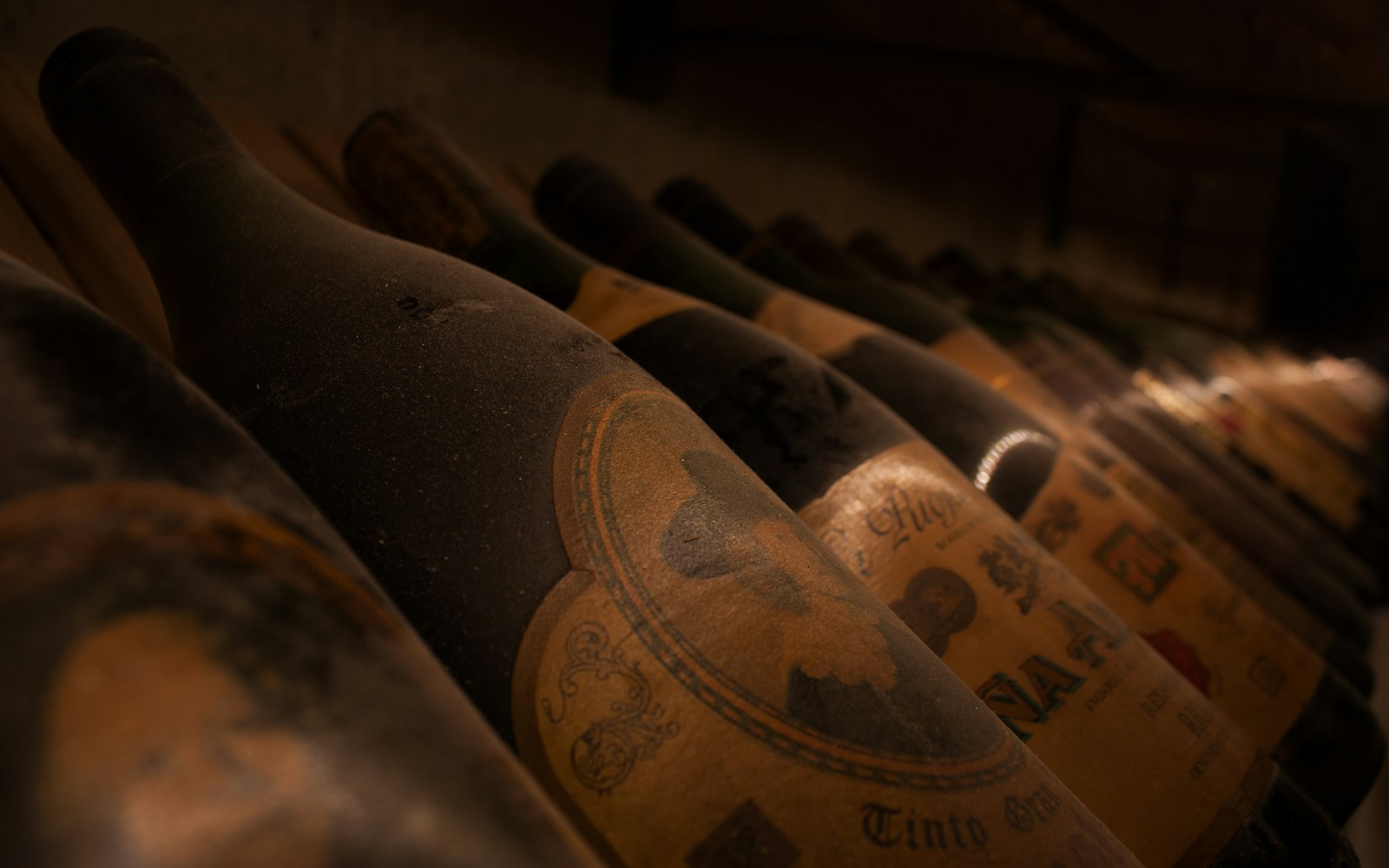
- Fill level: a level at top shoulder or high shoulder is not unusual for a wine over 30 years old, but in a wine of 10–20 years it is a warning sign.
- Storage conditions: wine from temperature-controlled storage is preferable to wine from a passive cellar without temperature control.
- Provenance: a collection kept in the same cellar, bought en primeur or on release and never traded usually commands a premium. For expensive lots, research the provenance first.
- Labels and cases: merchants generally avoid lots with damaged or stained labels or without original wooden cases; if you plan to drink the wine yourself, these flaws may mean a lower price.
- Guarantee terms: lots are essentially sold as they are, so read the catalogue's guarantee and liability terms carefully.
- Price: compare retail prices, past auction results and the estimate. Mixed lots are sometimes better value, because some buyers don't work out the value bottle by bottle.
Your first auction
- Go along and watch one first; live auctions generally need no ticket.
- List the lots you want and your maximum bid in advance, and stick to your limit.
- Consider starting with online auctions, where quantities and costs are smaller.
- Work out all the fees before you decide on your bid.
This article is for general information only and is not investment advice. Wine prices can go down as well as up.

About SenseCellar
- Once wine bought at auction is stored at SenseCellar, cellar cameras automatically record every bottle stored or removed, and the StockVins App keeps a complete in-and-out history.
- The cellar is kept at a constant temperature and humidity, with temperature and humidity monitoring, so conditions stay stable all year round.
- The App shows where each bottle is, when it was stored and its market value trend, making it easy to manage new additions to your collection.
Sources
- Hong Kong SAR Government, Commerce and Economic Development Bureau: Wine businesscedb.gov.hk
- Wine Spectator: How to buy wine at auctionwinespectator.com
- Wine Spectator: The extra costs of buying wine at auctionwinespectator.com