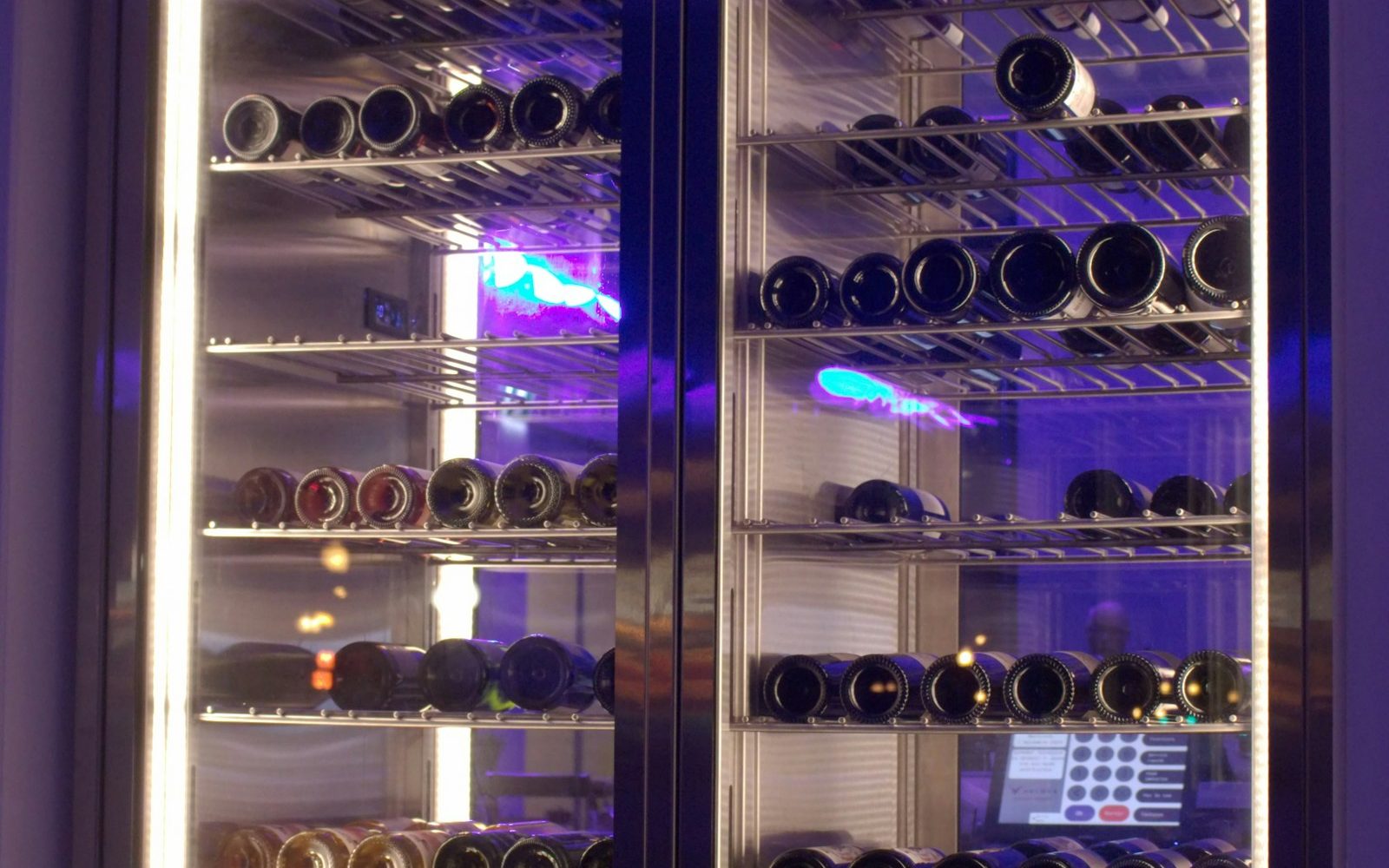
If your wine fridge breaks down, how do you protect your wine?
Like any appliance, a wine fridge can break down without warning. A rise of a few degrees for a short time generally won't spoil wine, but if a fridge fails unnoticed in a Hong Kong summer, the temperature inside gradually climbs towards room temperature, and the wine may suffer heat damage, leak or age faster. The most practical safeguards are a separate thermometer inside the fridge, regular checks and a backup place for your most valuable bottles.

In this article
Warning signs that a wine fridge is failing
- The compressor runs for long periods without stopping, but the temperature inside doesn't fall
- You can hear the compressor, but no cold air comes out inside
- The temperature display jumps up and down, or doesn't match a separate thermometer
- The door seal has perished: close the door on a sheet of thin paper, and if it slides out easily, the seal may have failed
- Frost builds up inside, or the bottles feel warmer than usual
Many breakdowns give no obvious warning, though. The worst case is a fridge that stops cooling while you are away, and you only find out when you get home.
If the fridge stops, will the wine be ruined?
Not necessarily. There is no fixed line above which wine goes bad. It depends on how high the temperature rises, for how long, and the condition of the wine itself.
- A rise from the low teens to around 20°C for a short time is generally not a problem; at most, the wine matures a little faster.
- If the temperature climbs above about 27°C and stays there for a while, the risk rises sharply. Hong Kong's mean summer temperature is about 28–29°C, and a home without air conditioning is often much the same.
- Old wines are generally more fragile than young ones.
- Even bottles from the same batch may come through heat differently, because every cork seals a little differently.
If you find your wine fridge has failed, first move the wine to the coolest spot in your home where the temperature is most stable, then arrange a repair or a replacement.
How to tell whether wine has been damaged by heat
- The cork has been pushed up and sticks out of the neck
- There are wine stains on the neck or capsule, sticky to the touch
- Wine has leaked, and the level is clearly lower than in other bottles of the same wine
- Once opened, the fruit tastes cooked or baked, and the wine seems tired overall

A bottle that looks normal has not necessarily escaped harm; in the end, only opening and tasting it will tell you. If your wine fridge has failed, check each bottle's cork position, neck and fill level, and set aside any that look wrong. Drink those first rather than keeping them for the long term.
5 ways to reduce the risk
- Keep a separate thermometer inside the fridge, ideally one that sends alerts to your phone, so you know straight away if the temperature goes wrong.
- Check the temperature once a week, and especially before and after a trip.
- Put the wine fridge somewhere well ventilated, away from heat and direct sunlight, and clean the dust off the condenser grille every 6 to 12 months.
- Know your fridge type: a thermoelectric fridge vibrates less but may struggle to hold the right temperature once the room is above about 27°C; a compressor fridge cools more powerfully and copes better with Hong Kong summers.
- Don't keep all your best wine in a single fridge, and have a backup place for your most valuable bottles.
When a professional cellar is worth considering
- Your wine fridge is full, and new bottles have to stay outside it
- Your collection is worth far more than a wine fridge
- You travel often and can't check on it regularly
- You plan to keep wine for the long term, or may sell it later

About SenseCellar
- The cellar is kept at a constant temperature and humidity, with temperature and humidity monitoring, so conditions stay stable all year round.
- Every locker locks separately and opens with the App, a passcode or your fingerprint. Members enter the cellar 24 hours a day by facial recognition, and it is monitored by CCTV around the clock.
- Cellar cameras read each label and record every bottle stored or removed, and the StockVins App updates your stock instantly.
Want to know which plan suits the size of your collection? Try the calculator on the Storage plans page, or book a visit.
Sources
- Wine Spectator: My wine fridge broke. Are my wines ruined?winespectator.com
- Wine Spectator: Just how quickly do wines get ruined by heat?winespectator.com
- Wine Spectator: Is a wine OK if the cork has pushed out?winespectator.com
- NewAir: What is a thermoelectric wine fridge?newair.com
- EngineerFix: Why is my wine fridge not cooling?engineerfix.com
- Hong Kong Observatory: Climatological normals (1991–2020)hko.gov.hk