How should you store wine in Hong Kong's humid weather?
Hong Kong's mean relative humidity is about 78% over the year, and 81–83% from March to August, above the 50–80% generally recommended for storing wine. Wine keeps best at about 13–16°C and around 70% humidity, at a steady temperature. In Hong Kong homes, humidity mainly makes labels go mouldy; what affects the wine itself more is summer heat and the daily temperature swings of switching the air conditioning on and off.

In this article
How Hong Kong's weather affects wine
According to the Hong Kong Observatory's 1991–2020 climate normals, Hong Kong's mean relative humidity over the year is 78%, and every month from March to August averages 81% or more. Summer (June to August) mean temperatures are about 28–29°C, and the mean daily maximum in July reaches 31.6°C.
In other words, for most of the year Hong Kong is hotter and more humid outdoors than wine's ideal storage conditions. Unless the air conditioning is on all the time, it is not much different indoors.
Hong Kong's average monthly temperature and humidity
The grey band shows the conditions generally recommended for storing wine; the red part is above that range.
| Month | Mean temperature (°C) | Mean relative humidity (%) |
|---|---|---|
| Jan | 16.5 | 74 |
| Feb | 17.1 | 79 |
| Mar | 19.5 | 82 |
| Apr | 23.0 | 83 |
| May | 26.3 | 83 |
| Jun | 28.3 | 82 |
| Jul | 28.9 | 81 |
| Aug | 28.7 | 81 |
| Sep | 27.9 | 78 |
| Oct | 25.7 | 73 |
| Nov | 22.2 | 72 |
| Dec | 18.2 | 70 |
What happens when humidity is too high
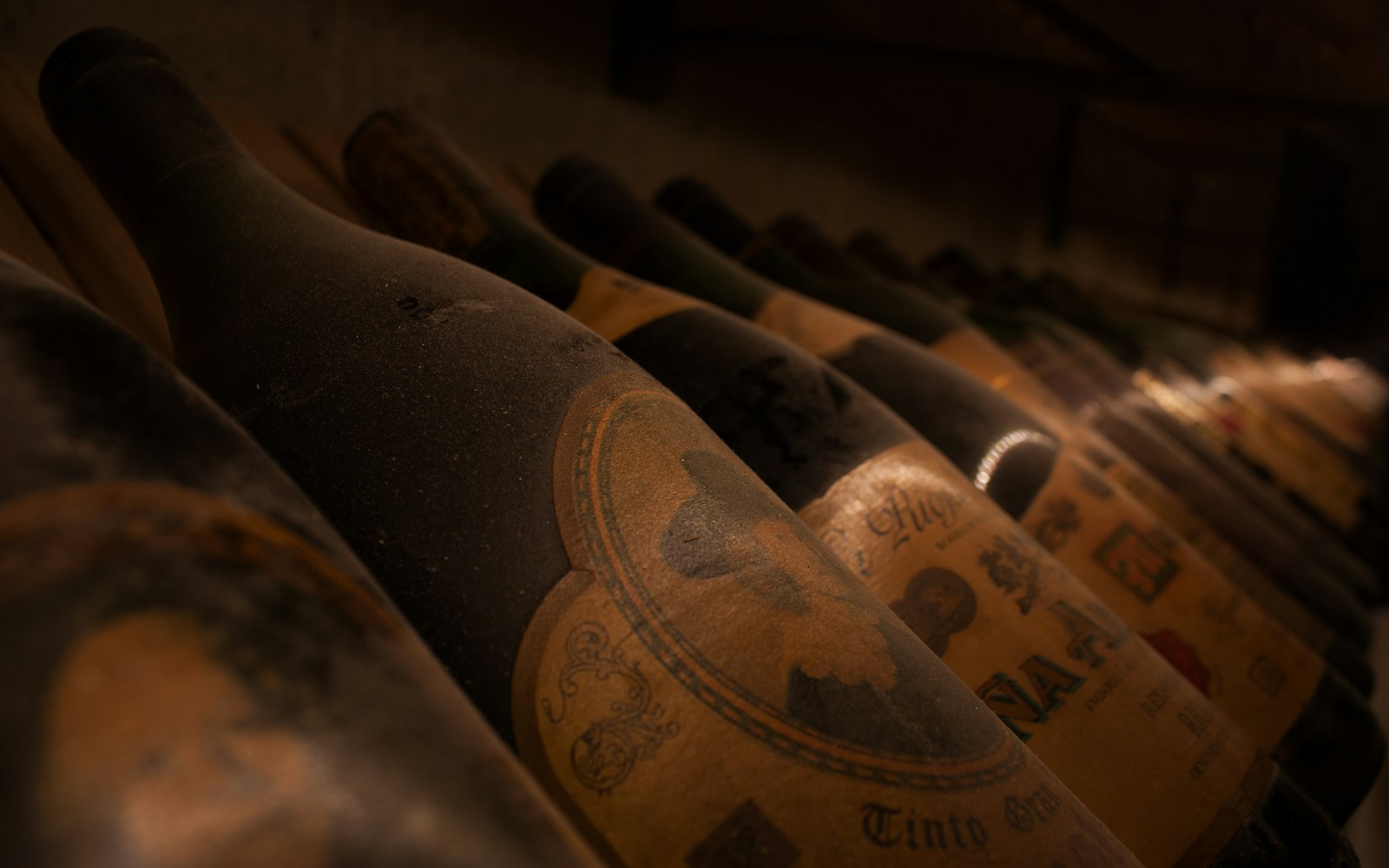
High humidity does not harm the wine in the bottle, but it easily makes labels, cardboard boxes and wooden cases go mouldy. A label that yellows, goes mouldy or even peels off spoils the bottle's appearance, which matters even more if you plan to give it as a gift or sell it later.
In spring, when warm, damp air rolls in, condensation forms on walls and floors, and cases stacked against a wall or on the floor are the first to get damp. If a box gets damp, take the wine out promptly, wipe the bottles dry and move them somewhere off the floor and well ventilated. Throw away any mouldy boxes so the mould does not spread to other labels.
What happens when humidity is too low
Running the air conditioning or a dehumidifier for long periods can make indoor air quite dry. If humidity stays too low for a long time, the cork gradually dries out and shrinks and its seal weakens. Air then gets into the bottle more easily, and the wine oxidises and ages before its time.
So drier is not better for storing wine. Humidity of about 50–80% is generally recommended, with around 70% ideal.
Temperature swings matter more than humidity
For wine, temperature matters more than humidity. The generally recommended storage temperature is about 13–16°C, and the more stable, the better.
A common pattern in Hong Kong homes: the air conditioning goes off when everyone leaves on a summer's day, and the room warms to 28°C or more, close to the temperature outside; in the evening the air conditioning goes back on and it cools down again. Heated and cooled every day, the wine expands and contracts, putting the cork's seal under pressure. Over time the bottle may leak, and the wine ages faster.
5 tips for storing wine at home
- Choose the coolest spot in your home, where the temperature is most stable, away from windows, the kitchen, the top of the fridge and air-conditioner vents.
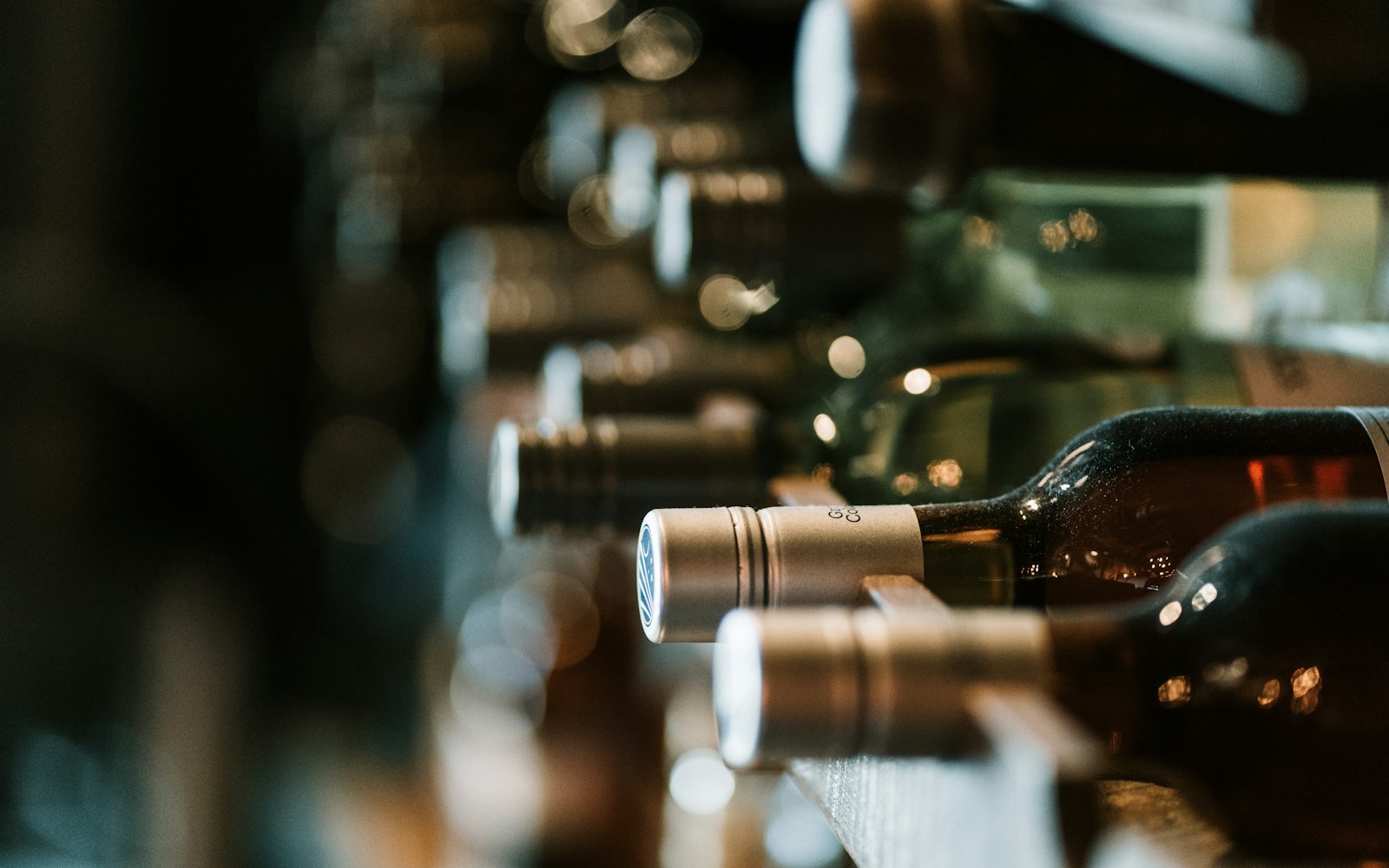
- Lay bottles sealed with a cork on their side so the wine stays in contact with the cork and keeps it from drying out; screw-cap bottles can stand upright.
- Keep wine out of sunlight and bright light. The original wooden case or a cabinet with a dark door helps.
- Keep it away from vibration, such as a washing machine or a door that is opened and closed often.
- In damp spring weather, keep cases away from walls and off the floor, and check labels and boxes regularly for mould.
Is a wine fridge enough?
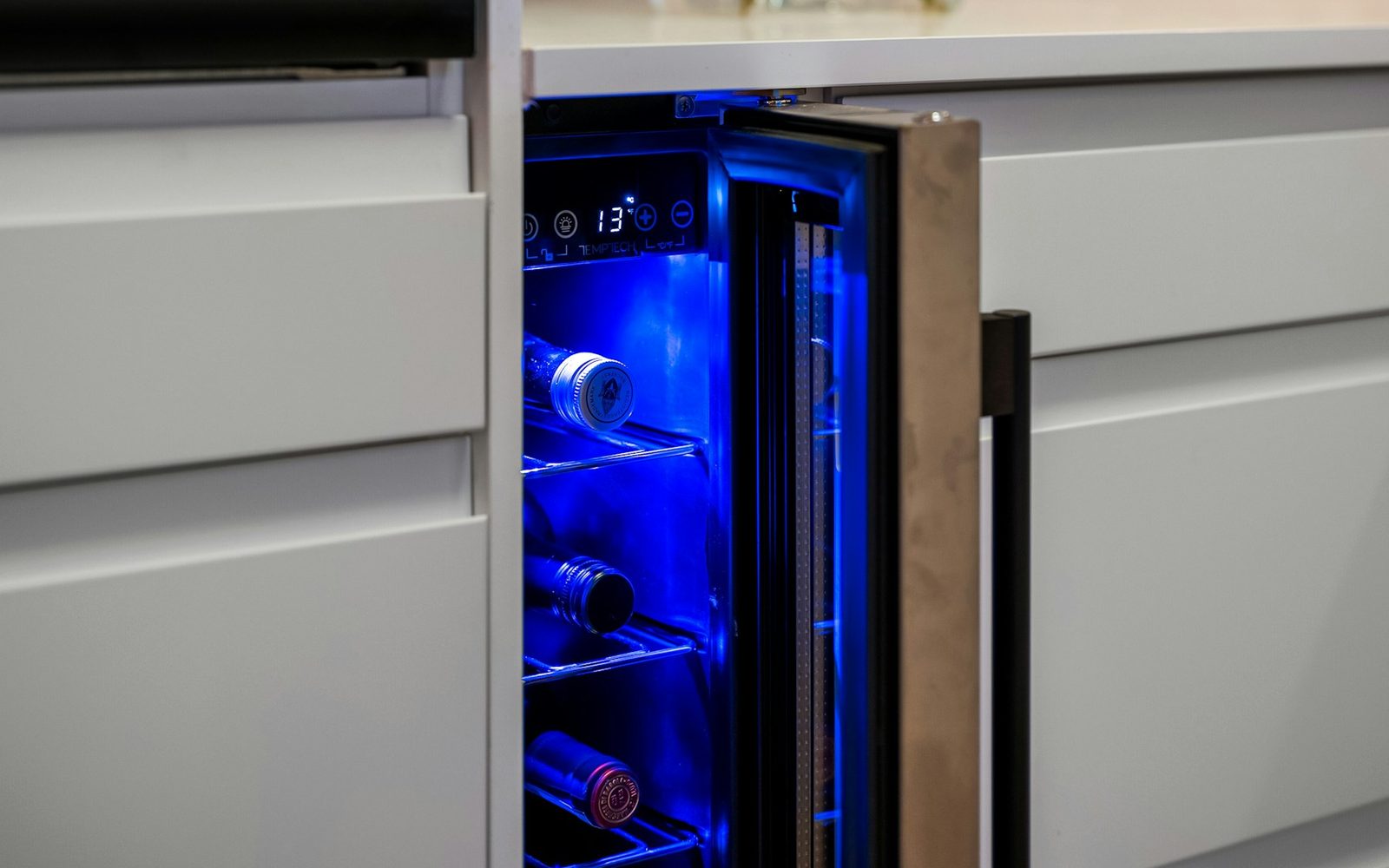
If you have a few dozen bottles and plan to drink them within a year or two, a reliable wine fridge will do the job. When choosing one, check:
- whether it holds its set temperature steadily when the room is at summer temperatures
- whether it has humidity control or is designed to hold humidity
- how much it vibrates and how noisy it is when the compressor is running
- its real capacity: the stated capacity is usually based on standard Bordeaux bottles, so fewer Burgundy or Champagne bottles will fit
If your collection is larger or more valuable, or you plan to keep wine for many years, a professional cellar gives better protection in temperature, humidity and security.

About SenseCellar
SenseCellar is in Sai Wan, next to HKU MTR Station, in a cellar designed specifically for wine:
- Constant temperature and humidity, with temperature and humidity monitoring, so conditions stay stable all year round.
- Every locker locks separately and opens with the App, a passcode or your fingerprint. Members enter the cellar 24 hours a day by facial recognition, and it is monitored by CCTV around the clock.
- Cellar cameras read each label and record every bottle stored or removed (invisible stocktake), so there is nothing to log by hand.
To see the cellar for yourself, book a visit.
Sources
- Hong Kong Observatory: Monthly Meteorological Normals for Hong Kong (1991–2020)hko.gov.hk
- Wine Spectator: Cellar humiditywinespectator.com
- Wine Spectator: Humidity and corkswinespectator.com
- Wine Enthusiast: Wine Storage 101blog.wineenthusiast.com