Should wine lie down or stand up? How light and vibration affect it
Bottles sealed with a cork are best stored lying down for the long term, so the wine keeps the cork moist and stops it drying out; screw-cap bottles can lie down or stand up. Light can give wine "lightstrike", and white, rosé and sparkling wines in clear or pale glass are the most at risk. Vibration is best avoided as far as possible, especially for old wines with sediment.


In this article
Lying down or standing up?
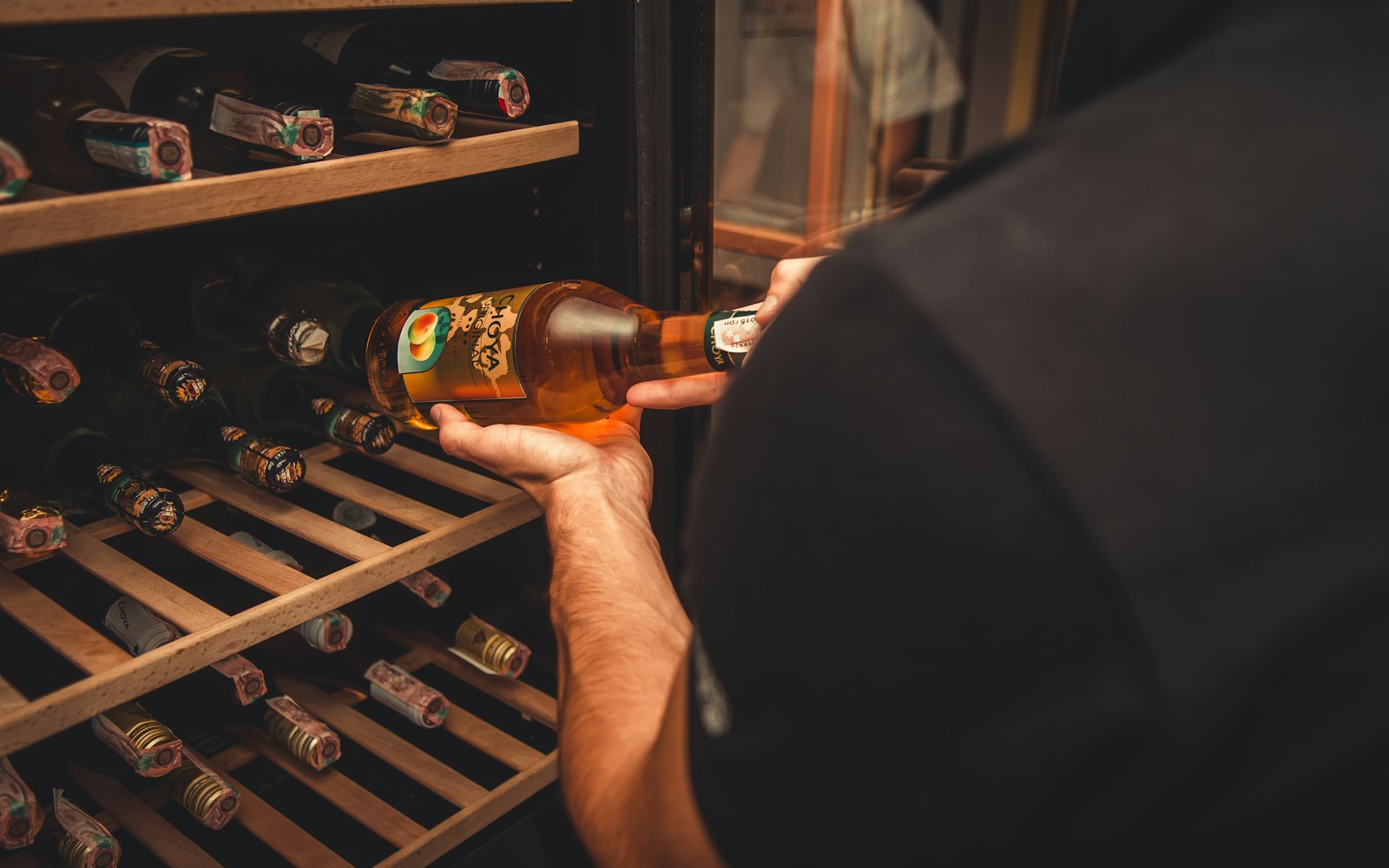
- Cork: lying the bottle down keeps the inside of the cork moist, so it does not dry out and let air into the bottle. This matters most for long-term storage.
- The outside of the cork: the end exposed to the air relies on surrounding humidity of about 70% to stay in good condition.
- Screw cap: there is no need to lie the bottle down, but it does no harm.
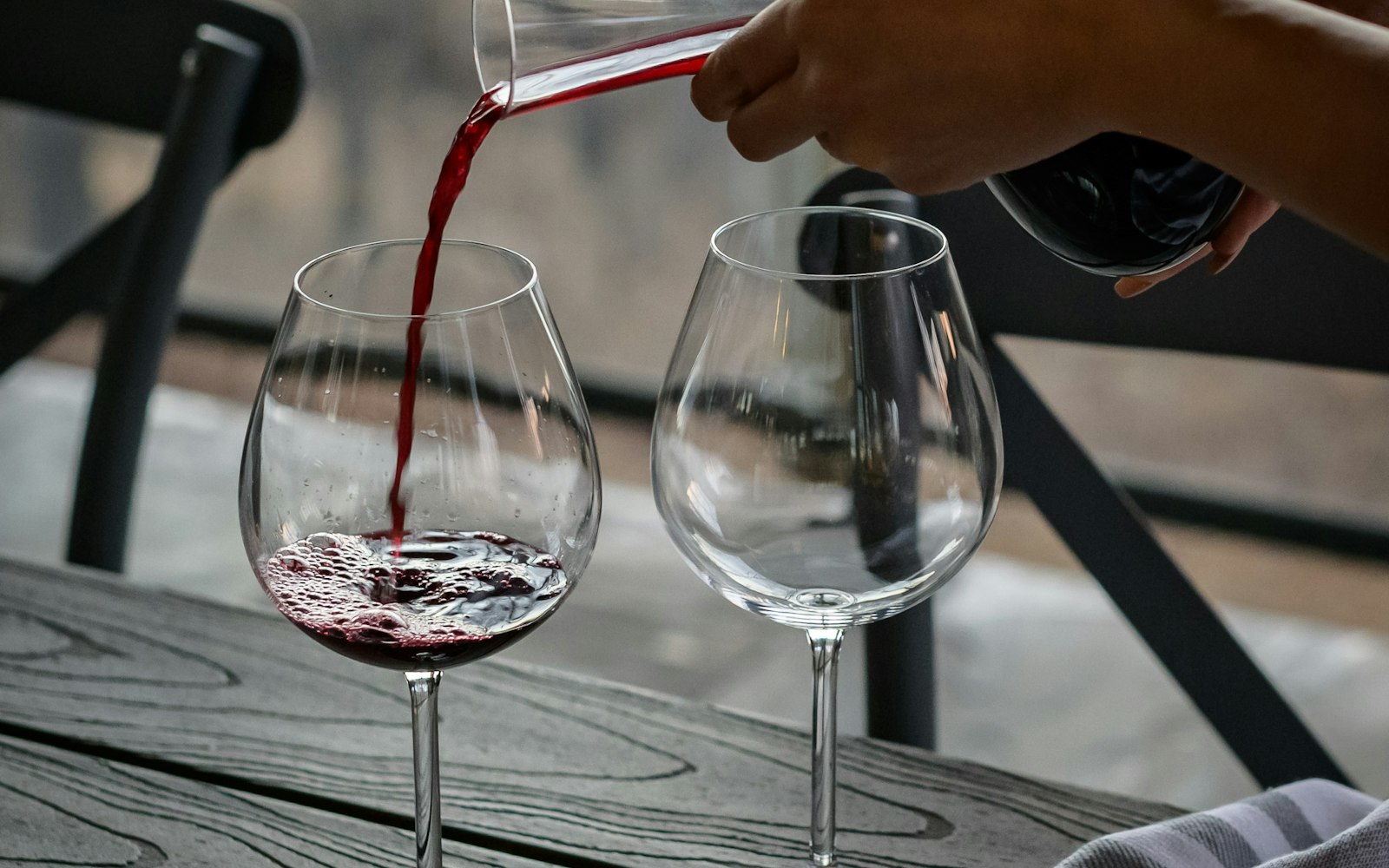
- Old wines before opening: stand them upright for a while first so the sediment settles to the bottom.

Why light affects wine: "lightstrike"
Wine naturally contains vitamin B2 (riboflavin). When light hits it, it breaks down sulphur-containing amino acids in the wine, creating smells like onion, cooked cabbage or even rotten eggs. This is called "lightstrike" (goût de lumière in French).
- Ultraviolet to blue light does the most damage. Direct sunlight is the main source, but fluorescent tubes and other lighting also have an effect.
- Some studies suggest it can appear in as little as about an hour.
- White, rosé and sparkling wines in clear or pale bottles are the most at risk.
- Dark brown and dark green bottles protect better, though even dark green glass blocks only about half of the light.
How vibration affects wine
- Wine is generally best kept away from sources of vibration, such as a washing machine or a door that is opened and closed often.
- Old wines often have sediment, which spreads through the wine when the bottle is shaken. The sediment is harmless but feels gritty in the mouth.
- Compressor wine fridges vibrate when they run. Thermoelectric wine fridges hardly vibrate at all, but find it harder to stay cool when the room is hot.
What you can do at home
- Lay bottles sealed with a cork on their side, in a wine rack or a wine fridge.
- Keep wine away from sunny windows; keeping the original cardboard box or wooden case helps shut out light.
- Keep white, rosé and sparkling wines in clear bottles in a box or a dark cabinet where possible.
- Keep wine away from a washing machine and other sources of vibration. After moving an old wine, let it rest for a while before opening it.
- At outdoor gatherings, keep bottles in the shade or wrap them in foil.

About SenseCellar
- The cellar is kept at a constant temperature and humidity, with temperature and humidity monitoring, so conditions stay stable all year round.
- Cellar cameras automatically record every bottle stored or removed, and the StockVins App shows where each one is at any time.
Sources
- Wine Spectator: Should I keep bottles of wine upright or on their sides?winespectator.com
- The World of Fine Wine: Light strike awarenessworldoffinewine.com
- Wine Spectator: How to protect old wine while travellingwinespectator.com
- Wine Enthusiast: Wine Storage 101blog.wineenthusiast.com
- NewAir: What is a thermoelectric wine fridge?newair.com